
Ever Biotechnology Joins CNTAC Delegation at the 2026 ITMF Annual Conference
2026-10-19 14:17
Introduction
Recently, Shandong Ever Biotechnology Co., Ltd. joined a delegation of the China National Textile and Apparel Council (CNTAC) to Fortaleza, Brazil, for the 2026 Annual Conference of the International Textile Manufacturers Federation (ITMF). During the event, the company's representatives exchanged views and learned alongside industry peers from around the world, gaining a clearer picture of the latest trends in the global textile industry's transformation and innovation — a useful reference for the company as it grasps the international landscape and connects with overseas resources. The official report follows.
On 14–15 October local time in Brazil, the 2026 ITMF Annual Conference and the Brazil 2026 International Conference were held at the Ceará Convention Center in Fortaleza. Under the theme “Future in Motion: Transformation, Innovation and New Realities,” nearly 400 textile representatives from 31 countries and regions gathered to exchange views and build consensus on transformation, technological innovation and other core issues against the backdrop of the industry's new environment.
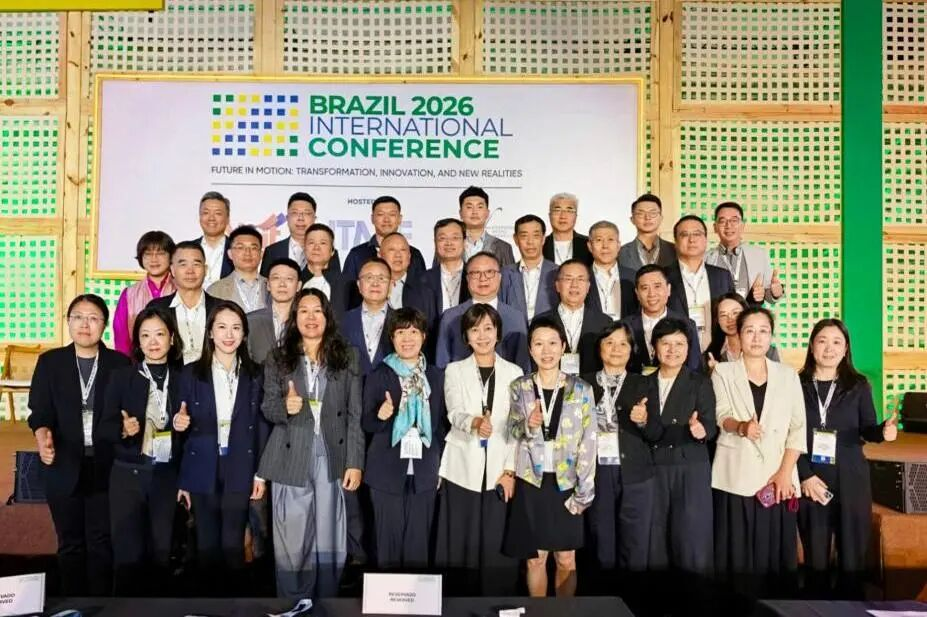
More than 30 participants attended, including Sun Ruizhe, President of CNTAC, Vice President Yan Yan, heads of relevant departments and specialized associations under CNTAC, and representatives of industry enterprises.
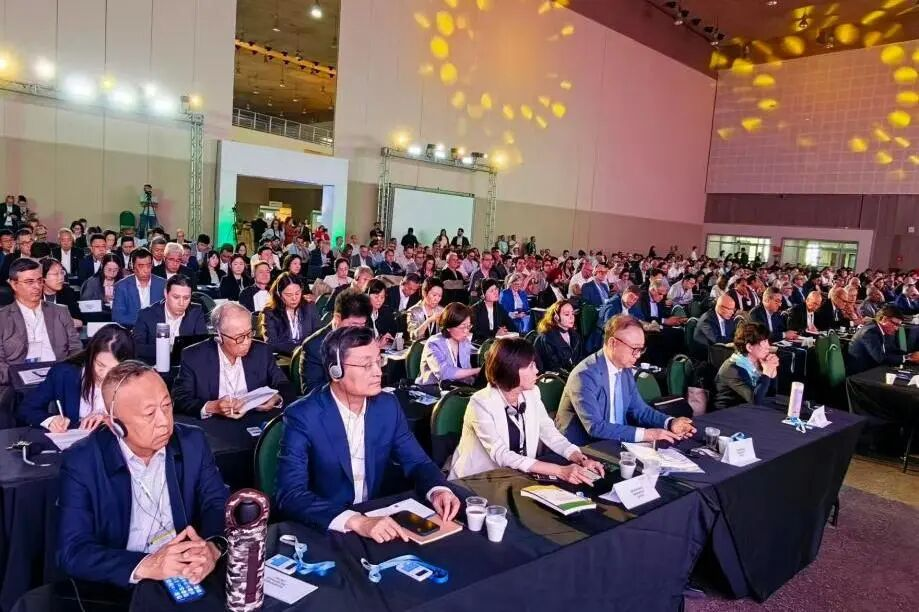
The conference featured thematic sessions on New Industry Landscape and Opportunities in Emerging Economies; The Future of Fibers; Production Models — Speed, Flexibility and Proximity to Market; ITMF 2026 Awards; Trade and Regulation — A New Landscape; New Expectations in an Unpredictable Market; Data and Behavioral Shifts; and Brazil — Capabilities, Integrated Value Chains and Investment Opportunities. Representatives from the global textile and fashion sector gathered for in-depth exchanges on the industry's hot topics.
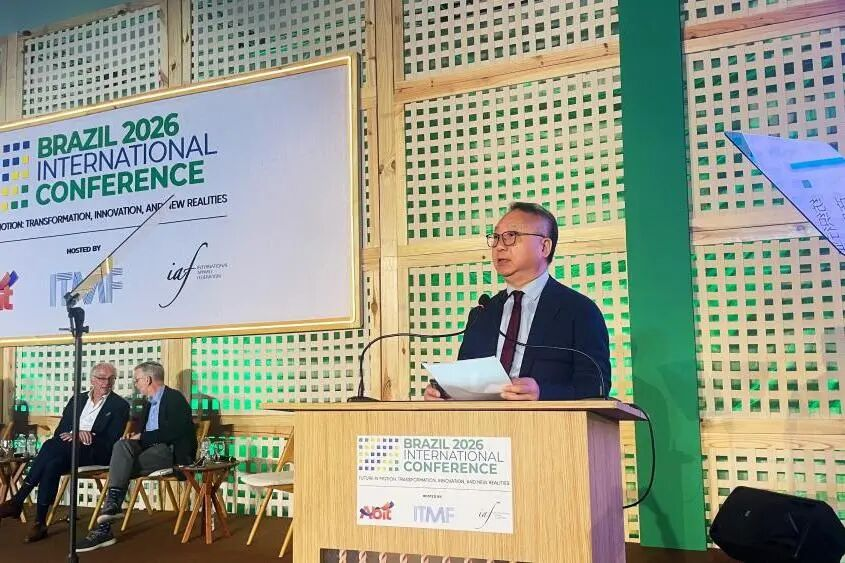
The Chinese delegation took an active part in all agenda items. In the Trade and Regulation — A New Landscape session, Sun Ruizhe, President of CNTAC, noted that the global textile supply chain is undergoing profound adjustment. As a widely distributed and highly integrated global industry, the textile industry is now feeling the impact of unilateralism and protectionism: trade remedy cases are increasing, and compliance requirements in areas such as low carbon, chemical safety, and labor and human rights keep tightening. Some countries frequently adjust tariffs and pursue near-shoring and friend-shoring, artificially intervening in supply chain layout; some economies turn compliance standards into competitive tools, raising market access thresholds for developing countries and SMEs and disrupting fair trade order. The global textile industry urgently needs to set aside short-sighted protectionism, build industry consensus, and jointly establish unified rules and standards to lower trade costs and keep the global textile supply chain stable and efficient.
He said that, faced with a complex external environment, China's textile and apparel industry continues to consolidate its foundations, accelerate the building of a modern industrial system, and push the industry toward technology, fashion and green development. China is advancing both industrial upgrading and high-standard institutional opening-up. Domestic policies guide the real economy toward intelligent and green transformation and take multiple measures to unlock domestic demand. Apart from necessary responses to unfair trade practices, China has not added import tariffs or trade restrictions; it applies zero-tariff treatment to a number of developing countries, continues to expand foreign investment access, and supports foreign participation in domestic R&D and major projects. He put forward three proposals: promote innovation through openness, drive transformation through integration, and create value through cooperation. He also called for upholding the principle that each thrives in its own way while all prosper together, jointly delivering the Sustainable Development Goals and contributing industry strength to building a community with a shared future for mankind.
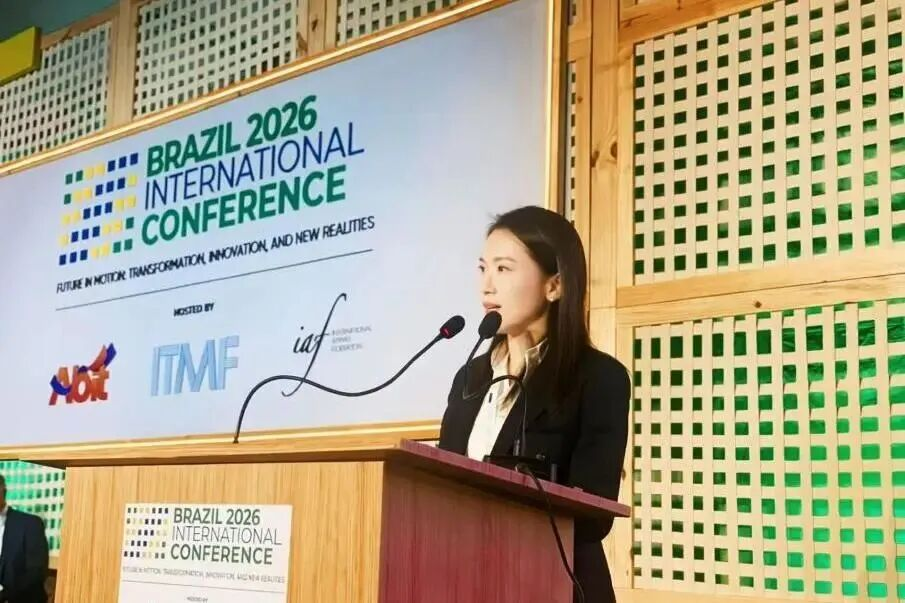
In the session on New Industry Landscape and Opportunities in Emerging Economies, Chen Hao of Bosideng Group shared his views in light of the brand's 50th anniversary. Bosideng's sustained focus on down jackets confirms that manufacturing heritage must be translated into tangible value that consumers can perceive; staying committed to good products, good stories and good experiences, and digging into scenario-based user needs, is the foundation for steady and sustained growth. The rise of Chinese brands also brings new collaboration opportunities to global value chains: companies from different countries can work together on the strength of their endowments in material R&D, design capability and local market knowledge, validating through small-batch pilots before scaling up, so that both sides benefit. Chen Hao believes companies in emerging economies should identify their product value positioning based on their own resource endowments, and use it to guide design, channel and service planning. As consumer demand keeps evolving, there is no single development model for the industry; only by staying committed to long-termism, keeping up continuous learning, and understanding global consumers with craftsmanship can brands keep earning market trust and help the global textile industry move forward together.
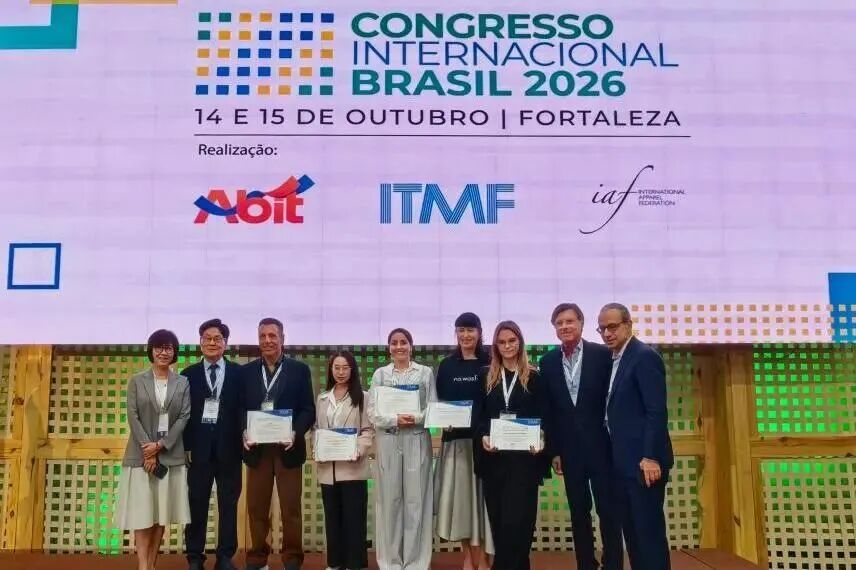
The ITMF 2026 Awards were announced at the conference. China's Yuantian Biotechnology (Tianjin) Co., Ltd. received the ITMF Start-up Award, while “Desert–Mulberry: An Ecological Regeneration Cycle System for Bioactive Silk,” a research project jointly developed by Sichuan Simabo Technology Co., Ltd. and Wuhan Textile University, won the ITMF Sustainability and Innovation Award — a showcase of China's textile industry's innovation in recycling and ecological regeneration.
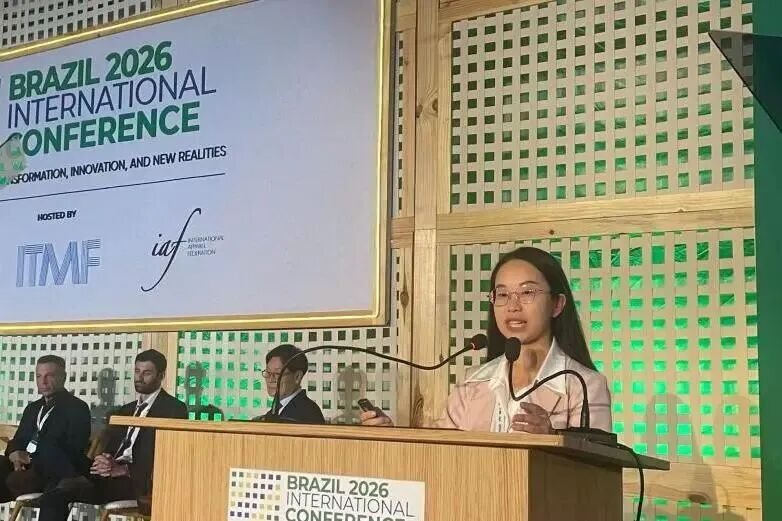
Speaking as the representative of the ITMF Start-up Award winner, Pan Pengcheng of Yuantian Biotechnology said the company has moved beyond the limits of conventional physical and chemical recycling with a third-generation enzymatic recycling process. The process depolymerizes blended polyester fabrics under mild conditions to produce RB®PET on par with virgin material — recycling without downcycling. A 300-metric-ton pilot has been completed, and the first 6,500-metric-ton bio-enzymatic recycling line will start production in the fourth quarter of this year, turning textile waste into raw material for sportswear, outdoor gear and everyday apparel.
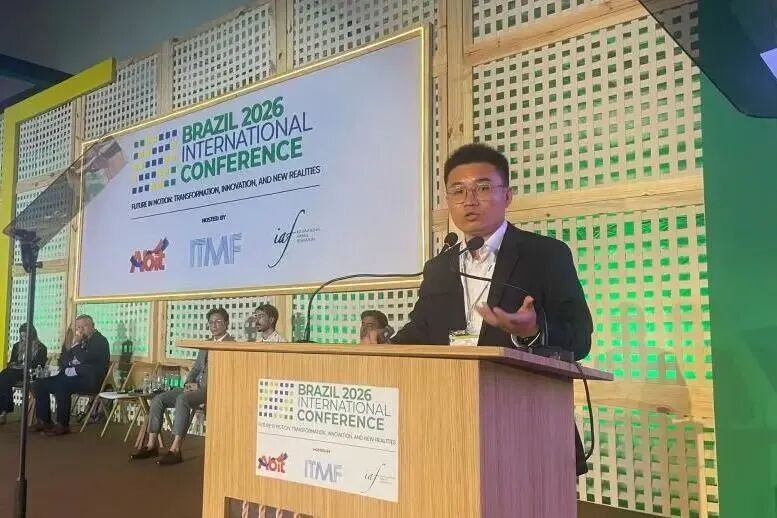
Lu Zhentan, professor at Wuhan Textile University, spoke as the representative of the ITMF Sustainability and Innovation Award winner. Silk carries thousands of years of political, economic and cultural value, he said, yet traditional silk reeling consumes large amounts of energy and water at high temperatures and generates protein-rich wastewater; at the same time, global desertification is severe, making it urgent to restore degraded ecosystems and unlock their economic value. The project therefore builds a complete circular economy model with three goals: fabric performance, biological application and cultural inheritance. Through breakthroughs in interfacial layer separation and other core technologies, the process temperature is lowered to 50°C, and modification technology solves the stability problem of silk. The project sharply reduces carbon emissions and wastewater discharge; at scale, it could cut wastewater by tens of millions of metric tons. The technology and business model are replicable, turning ecological disadvantage into development opportunity.
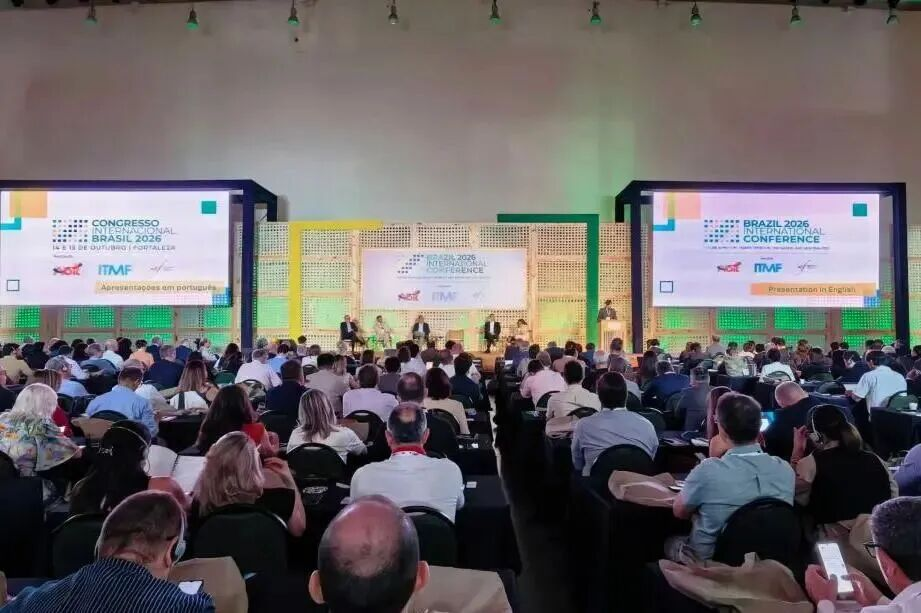
The conference also announced that the 2027 ITMF Annual Conference will be held in Cairo, Egypt, on 17 and 18 October 2027.
Drawing on this international industry platform, the Chinese delegation actively carried out external exchanges, shared China's experience in textile transformation and innovation, and promoted practical cooperation and mutual benefit across the global textile industry.
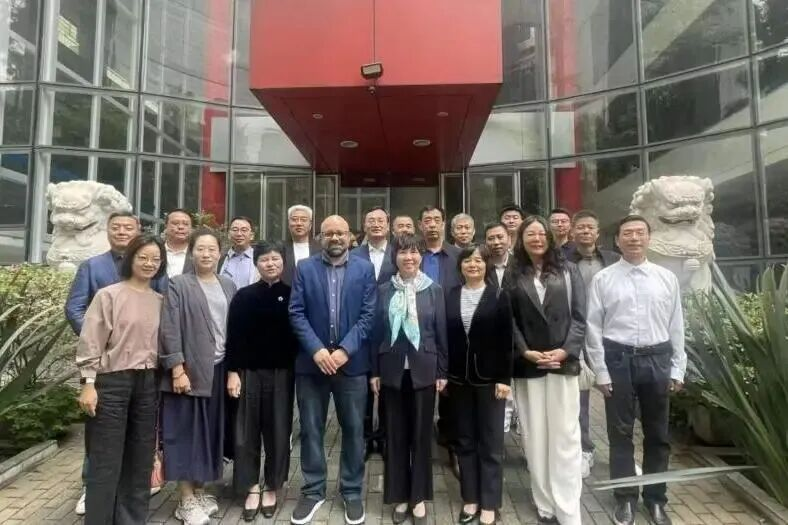
During the conference, the delegation also visited the Brazil–China Trade Center. The two sides held practical discussions on the current state, distinctive strengths and market potential of the textile industries in both countries, and explored cooperation possibilities such as trade matchmaking and joint participation in exhibitions. They plan to use the Gotex Show to build a regular exchange channel between Chinese and Brazilian textile companies, promoting resource connectivity and shared business opportunities along both countries' value chains.
In addition, delegates visited the Brazilian textile company Vicunha.
Recently, Shandong Ever Biotechnology Co., Ltd. joined a delegation of the China National Textile and Apparel Council (CNTAC) to Fortaleza, Brazil, for the 2026 Annual Conference of the International Textile Manufacturers Federation (ITMF). During the event, the company's representatives exchanged views and learned alongside industry peers from around the world, gaining a clearer picture of the latest trends in the global textile industry's transformation and innovation — a useful reference for the company as it grasps the international landscape and connects with overseas resources. The official report follows.
On 14–15 October local time in Brazil, the 2026 ITMF Annual Conference and the Brazil 2026 International Conference were held at the Ceará Convention Center in Fortaleza. Under the theme “Future in Motion: Transformation, Innovation and New Realities,” nearly 400 textile representatives from 31 countries and regions gathered to exchange views and build consensus on transformation, technological innovation and other core issues against the backdrop of the industry's new environment.
More than 30 participants attended, including Sun Ruizhe, President of CNTAC, Vice President Yan Yan, heads of relevant departments and specialized associations under CNTAC, and representatives of industry enterprises.
The conference featured thematic sessions on New Industry Landscape and Opportunities in Emerging Economies; The Future of Fibers; Production Models — Speed, Flexibility and Proximity to Market; ITMF 2026 Awards; Trade and Regulation — A New Landscape; New Expectations in an Unpredictable Market; Data and Behavioral Shifts; and Brazil — Capabilities, Integrated Value Chains and Investment Opportunities. Representatives from the global textile and fashion sector gathered for in-depth exchanges on the industry's hot topics.
The Chinese delegation took an active part in all agenda items. In the Trade and Regulation — A New Landscape session, Sun Ruizhe, President of CNTAC, noted that the global textile supply chain is undergoing profound adjustment. As a widely distributed and highly integrated global industry, the textile industry is now feeling the impact of unilateralism and protectionism: trade remedy cases are increasing, and compliance requirements in areas such as low carbon, chemical safety, and labor and human rights keep tightening. Some countries frequently adjust tariffs and pursue near-shoring and friend-shoring, artificially intervening in supply chain layout; some economies turn compliance standards into competitive tools, raising market access thresholds for developing countries and SMEs and disrupting fair trade order. The global textile industry urgently needs to set aside short-sighted protectionism, build industry consensus, and jointly establish unified rules and standards to lower trade costs and keep the global textile supply chain stable and efficient.
He said that, faced with a complex external environment, China's textile and apparel industry continues to consolidate its foundations, accelerate the building of a modern industrial system, and push the industry toward technology, fashion and green development. China is advancing both industrial upgrading and high-standard institutional opening-up. Domestic policies guide the real economy toward intelligent and green transformation and take multiple measures to unlock domestic demand. Apart from necessary responses to unfair trade practices, China has not added import tariffs or trade restrictions; it applies zero-tariff treatment to a number of developing countries, continues to expand foreign investment access, and supports foreign participation in domestic R&D and major projects. He put forward three proposals: promote innovation through openness, drive transformation through integration, and create value through cooperation. He also called for upholding the principle that each thrives in its own way while all prosper together, jointly delivering the Sustainable Development Goals and contributing industry strength to building a community with a shared future for mankind.
In the session on New Industry Landscape and Opportunities in Emerging Economies, Chen Hao of Bosideng Group shared his views in light of the brand's 50th anniversary. Bosideng's sustained focus on down jackets confirms that manufacturing heritage must be translated into tangible value that consumers can perceive; staying committed to good products, good stories and good experiences, and digging into scenario-based user needs, is the foundation for steady and sustained growth. The rise of Chinese brands also brings new collaboration opportunities to global value chains: companies from different countries can work together on the strength of their endowments in material R&D, design capability and local market knowledge, validating through small-batch pilots before scaling up, so that both sides benefit. Chen Hao believes companies in emerging economies should identify their product value positioning based on their own resource endowments, and use it to guide design, channel and service planning. As consumer demand keeps evolving, there is no single development model for the industry; only by staying committed to long-termism, keeping up continuous learning, and understanding global consumers with craftsmanship can brands keep earning market trust and help the global textile industry move forward together.
The ITMF 2026 Awards were announced at the conference. China's Yuantian Biotechnology (Tianjin) Co., Ltd. received the ITMF Start-up Award, while “Desert–Mulberry: An Ecological Regeneration Cycle System for Bioactive Silk,” a research project jointly developed by Sichuan Simabo Technology Co., Ltd. and Wuhan Textile University, won the ITMF Sustainability and Innovation Award — a showcase of China's textile industry's innovation in recycling and ecological regeneration.
Speaking as the representative of the ITMF Start-up Award winner, Pan Pengcheng of Yuantian Biotechnology said the company has moved beyond the limits of conventional physical and chemical recycling with a third-generation enzymatic recycling process. The process depolymerizes blended polyester fabrics under mild conditions to produce RB®PET on par with virgin material — recycling without downcycling. A 300-metric-ton pilot has been completed, and the first 6,500-metric-ton bio-enzymatic recycling line will start production in the fourth quarter of this year, turning textile waste into raw material for sportswear, outdoor gear and everyday apparel.
Lu Zhentan, professor at Wuhan Textile University, spoke as the representative of the ITMF Sustainability and Innovation Award winner. Silk carries thousands of years of political, economic and cultural value, he said, yet traditional silk reeling consumes large amounts of energy and water at high temperatures and generates protein-rich wastewater; at the same time, global desertification is severe, making it urgent to restore degraded ecosystems and unlock their economic value. The project therefore builds a complete circular economy model with three goals: fabric performance, biological application and cultural inheritance. Through breakthroughs in interfacial layer separation and other core technologies, the process temperature is lowered to 50°C, and modification technology solves the stability problem of silk. The project sharply reduces carbon emissions and wastewater discharge; at scale, it could cut wastewater by tens of millions of metric tons. The technology and business model are replicable, turning ecological disadvantage into development opportunity.
The conference also announced that the 2027 ITMF Annual Conference will be held in Cairo, Egypt, on 17 and 18 October 2027.
Drawing on this international industry platform, the Chinese delegation actively carried out external exchanges, shared China's experience in textile transformation and innovation, and promoted practical cooperation and mutual benefit across the global textile industry.
During the conference, the delegation also visited the Brazil–China Trade Center. The two sides held practical discussions on the current state, distinctive strengths and market potential of the textile industries in both countries, and explored cooperation possibilities such as trade matchmaking and joint participation in exhibitions. They plan to use the Gotex Show to build a regular exchange channel between Chinese and Brazilian textile companies, promoting resource connectivity and shared business opportunities along both countries' value chains.
In addition, delegates visited the Brazilian textile company Vicunha.